Temperance — The Temperantia Virtue
Temperance (Temperantia) is the art of knowing when enough has arrived. In the 7 virtues test, Temperance is never grim joylessness; rather, it is balanced proportion around food, screens, work, spending, and speech—enjoying good things fully while staying firmly in charge of the brakes.
What Temperance Measures in the 7 Virtues Test
Your Temperance score integrates four everyday habits: stopping consumption at a limit you set while calm, resisting runaway comfort-binging after stressful days, protecting sleep and reflection margins from overwork or over-entertainment, and holding back unnecessary final remarks in heated debates.
When Temperantia ranks high, life gains rhythm: work stops bleeding into midnight, leisure actually restores you instead of leaving you foggy, and conversations stay concise. Because half of the prompts in the 7 virtues test are reverse-scored, merely valuing moderation conceptually cannot push your score into the Dominant tier unless your stopping cues hold on ordinary weeknights.
How Temperance Answers Gluttony (Gula) Beyond the Dinner Table
Temperantia opposes Gula—Gluttony, the habit of consuming past the threshold of true enjoyment or nourishment. In modern life, Gluttony covers late-night endless scrolling, compulsive inbox refreshing, impulse cart filling, and talking past the point that actually needed to be made.
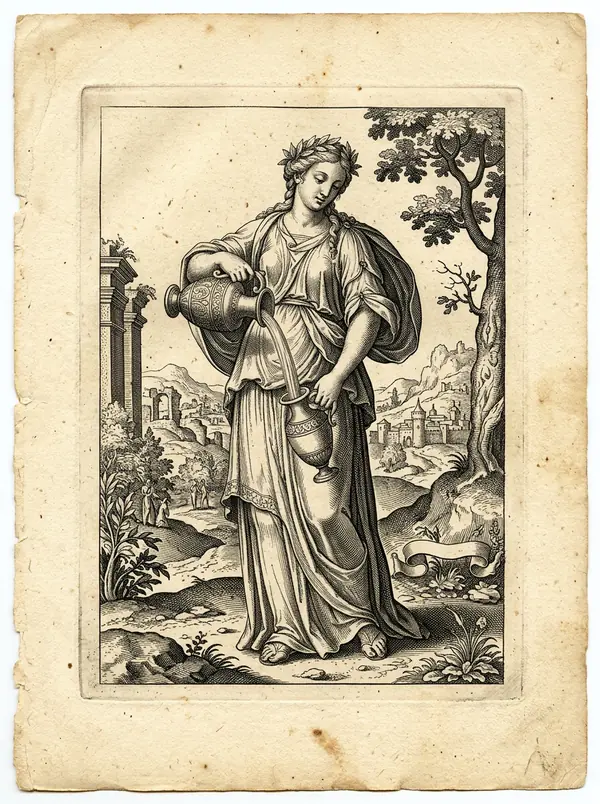
Classic iconography depicts Temperance pouring liquid steadily between two vessels: neither dry deprivation nor clumsy overflow, simply measured pace. When Temperance sits low on your heptagon, it commonly becomes the overflow gate—the boundary most likely to give way late in the evening when tiredness lowers resistance.
| Everyday Scene | Temperance Response | Gluttony Pull |
|---|---|---|
| An exhausting workday ends and comfort cravings kick in | Enjoy a defined portion or episode, then close the evening cleanly on schedule. | Keeping the plate, stream, or cart running long past the moment satisfaction stopped. |
| A conversation turns slightly heated or repetitive | Make your clearest point once and let silence settle instead of chasing the final word. | Piling on extra explanations purely to dominate the closing beat. |
| An exciting project tempts you to skip sleep and margins all week | Protect bedtime and recovery hours so tomorrow’s judgment stays sharp. | Trading steady cadence for reckless late-night overdrive. |
Three Concrete Habits to Strengthen Temperance
Set One Physical Stopping Cue Before Starting
Action cue: Place your phone in another room at a set hour or portion snacks onto a small dish rather than eating straight from the bag.
Clear external stops outperform willpower once evening fatigue lowers self-monitoring.
Cut Your Last Sentence in Tense Discussions
Action cue: Once you state a point cleanly, pause five seconds before adding any reinforcing remark.
Verbal restraint exercises the exact same temperance muscle as physical moderation.
Close One Open Loop Before Opening Another
Action cue: Finish or park the current tab, meal, or task before starting the next distraction.
Slowing transitions restores awareness of what truly feels like enough.
How Temperance Scores Read Across the Four Tiers
Unformed
Once momentum starts—snacking, scrolling, working, or arguing—stopping at enough feels steeply uphill.
Situational
Balanced during calm mornings, prone to runaway compensation when evening stress hits.
Steady
Dependable daily margins across appetite, speech, and pace with minor slips on tough weeks.
Dominant
Calm internal thermostat; pleasure and effort stay in clean proportion without feeling rigid.
See Where Temperance Ranks in Your Heptagon
Score Temperance alongside the other six heavenly virtues with 50% reverse-scored items—and discover your Top-2 character archetype in under two minutes.